

Supporting Your Mood, Metabolism, and Momentum This February
☀️ Seasonal Affective Disorder (SAD) & Weight Health
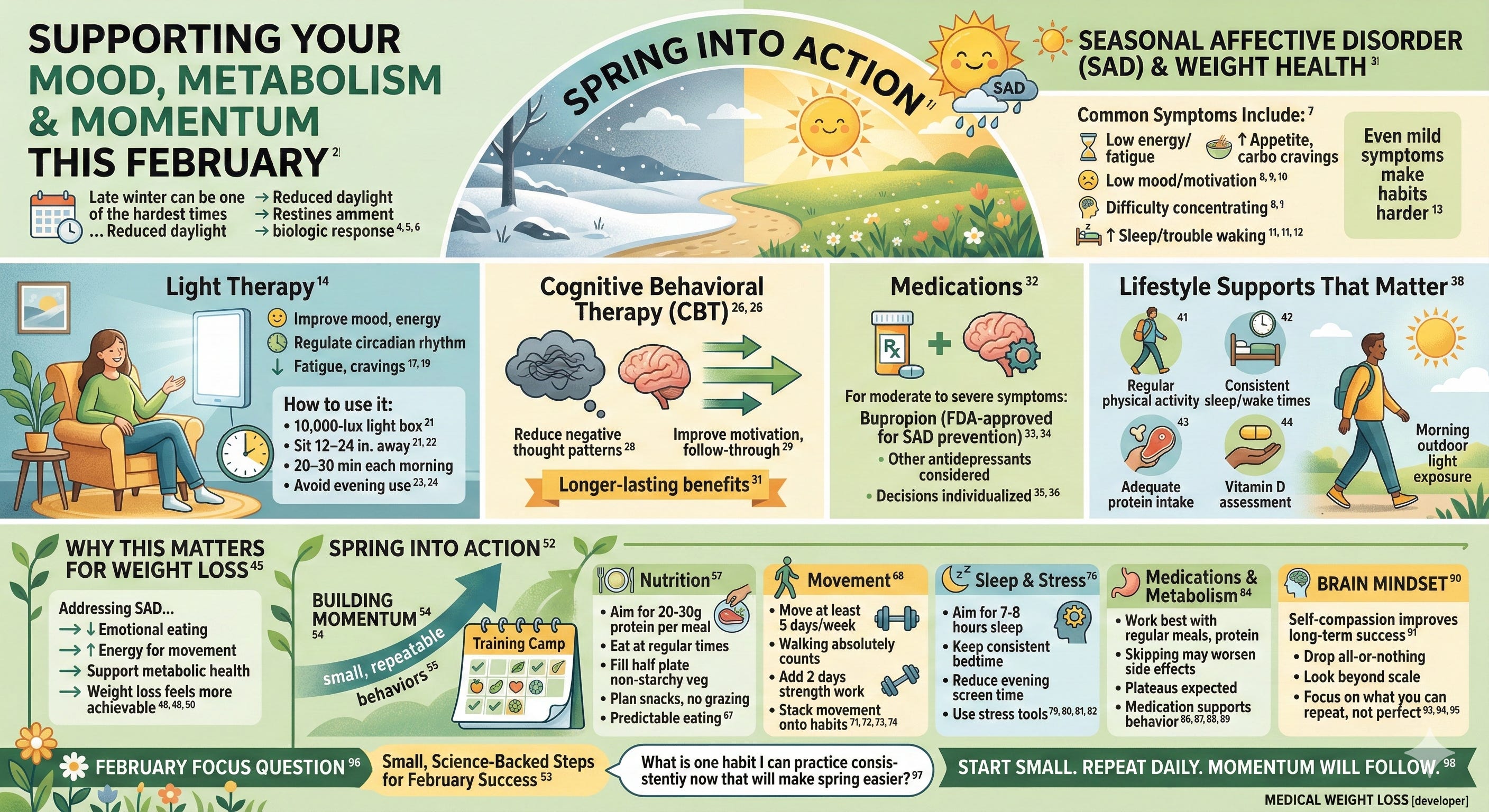
Late winter can be one of the hardest times of year—physically and emotionally. Reduced daylight can contribute to Seasonal Affective Disorder (SAD) or milder winter-related symptoms that affect energy, mood, sleep, cravings, and weight regulation.
This is not a lack of willpower. It is a biologic response to seasonal light changes.
Common Symptoms Include:
Low energy or persistent fatigue
Increased appetite, especially carbohydrate cravings
Low mood or loss of motivation
Difficulty concentrating
Increased sleep or trouble waking
Even mild symptoms can make healthy habits feel much harder.
💡 Evidence-Based Treatments for SAD
Light Therapy (First-Line Treatment)
Light therapy is one of the most effective non-medication treatments for SAD.
What studies show:
Improves mood and daytime energy
Helps regulate circadian rhythm
May reduce fatigue and cravings
How to use it:
Use a 10,000-lux light box
Sit 12–24 inches away
Use for 20–30 minutes each morning
Avoid evening use to prevent sleep disruption
Many people notice improvement within 1–2 weeks.
🧠 Cognitive Behavioral Therapy (CBT)
CBT—especially therapy tailored for SAD—can:
Reduce negative thought patterns
Improve motivation and follow-through
Lower risk of recurring winter symptoms
CBT has been shown to provide longer-lasting benefits than light therapy alone.
💊 Medications (When Appropriate)
For moderate to severe symptoms:
Bupropion is FDA-approved for SAD prevention
Other antidepressants may be considered based on symptoms
Treatment decisions should always be individualized
Improving mood and energy often improves consistency with nutrition and movement.
🌿 Lifestyle Supports That Matter
These are biologically meaningful—not “extras”:
Morning outdoor light exposure (even on cloudy days)
Regular physical activity
Consistent sleep and wake times
Adequate protein intake
Vitamin D assessment when appropriate
🌱 Why This Matters for Weight Loss
Mood, sleep, appetite regulation, and metabolism are deeply connected. Addressing SAD or winter-related symptoms can:
Reduce emotional and stress-related eating
Improve energy for movement
Support metabolic health
Make weight loss feel more achievable
If winter feels harder, it doesn’t mean you’re failing—it means your body needs support.
🌷 Spring Into Action
Small, Science-Backed Steps for February Success
February isn’t about starting over—it’s about building momentum. Research consistently shows that small, repeatable behaviors are more effective for long-term weight management than drastic changes.
Think of this month as training camp, not race day.
🥗 Nutrition: Focus on Protein & Structure
Higher-protein, structured eating patterns help with:
Appetite control
Lean muscle preservation
Blood sugar stability
February Nutrition Goals
Aim for 20–30g of protein per meal
Eat at regular times, even on weekends
Fill half your plate with non-starchy vegetables
Plan snacks instead of grazing
You don’t need perfect eating—you need predictable eating.
🚶 Movement: Consistency Beats Intensity
Consistent, moderate activity outperforms sporadic intense workouts.
February Movement Goals
Move at least 5 days per week
Walking absolutely counts
Add 2 days of strength or resistance work
Stack movement onto existing habits
If you can’t do more, do it more often.
😴 Sleep & Stress: The Hidden Drivers
Poor sleep and chronic stress increase hunger hormones and insulin resistance—independent of calories.
February Reset
Aim for 7–8 hours of sleep
Keep a consistent bedtime
Reduce evening screen time when possible
Use stress tools that work for you
Weight loss is harder when your nervous system is exhausted.
💊 Medications & Metabolism
If you’re using anti-obesity medications:
They work best with regular meals and adequate protein
Skipping meals may worsen side effects
Plateaus are expected and normal
Medication supports behavior—it doesn’t replace it.
🧠 Mindset: Progress Over Perfection
Studies show that self-compassion improves long-term success.
This month:
Drop the all-or-nothing mindset
Look beyond the scale
Focus on what you can repeat, not what you can perfect
🌼 February Focus Question
“What is one habit I can practice consistently now that will make spring easier?”
Start small. Repeat daily. Momentum will follow.